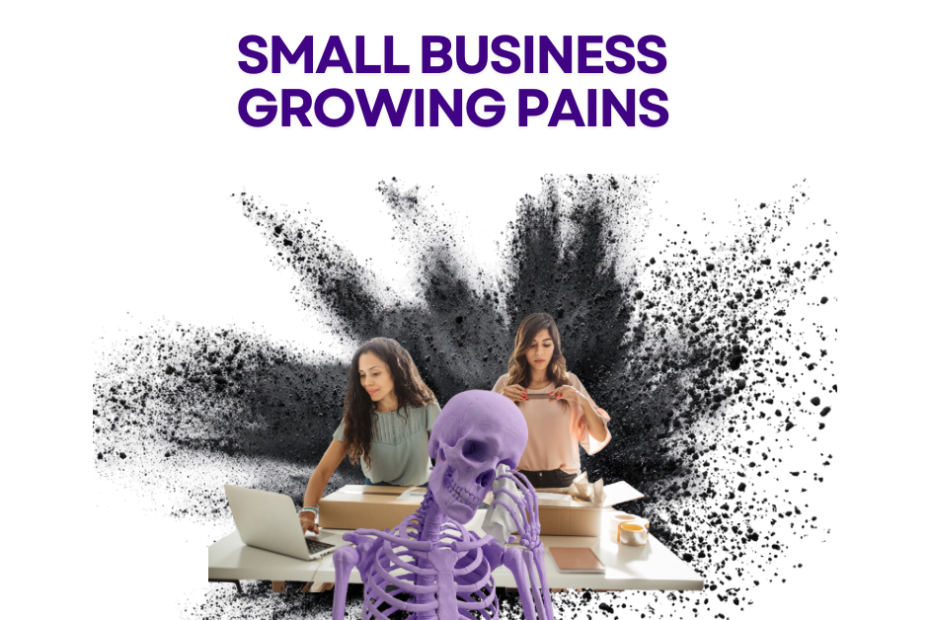
There’s a moment most solo or small business owners hit at some point. The weird growing pains and decision stage. I’ve been reading about it and then someone rang me about it.
This is not the beginning of business, where everything is fuelled caffeine and blind optimism.
Nor is it the middle, where things are rolling along and you’re quietly impressed you are going well.
No, it’s the moment where you realise the next step or growing your business isn’t obvious. In fact, it’s confusing, heavy and wrapped in more emotions than you’d care to admit.
Let’s talk about that moment, because almost no one does.
The myth of the “clear next step”
We’re sold this idea that business growth is a neat ladder.
Step 1, step 2, step 3, champagne, freedom, yacht.
Real life looks more like:
“Do I double down, back out, burn it all, take a loan, hire help, stay lean, expand, shrink, close it down or cry in the shower again?”
Not exactly motivational-poster material.
The truth is growth is not always a straight line. I talk about the importance of strategy a lot. However it’s also true that sometimes the biggest challenge isn’t strategy, it’s making a decision when your brain is fried and your emotions are tangled up in every possible outcome.
Burnout makes everything look bigger than it is
When you’re tired, the tiny problems feel huge and the huge problems feel impossible.
This is not a personal flaw. It’s biology.
Burnout shrinks your ability to:
- weigh risks
- imagine a future
- problem solve
- make decisions
- trust yourself
So if you ever feel like you “should” be able to make a big decision but you can’t, remember this. You’re not failing. You’re fried.
Big decisions made in burnout are often bad ones, because you’re deciding from a place of fear, not clarity.
The guilt tax no one talks about
One of the heaviest burdens for solo founders is the guilt attached to every move.
The guilt of:
- changing direction
- slowing down
- pushing forward
- taking on debt
- not taking on debt
- sticking with an idea
- letting go of an idea
- disappointing investors,family, customers or your past self
Inside your head, guilt makes it sound like you’re “failing”.
But guilt isn’t a business metric. It’s just a feeling pretending to be a fact.
The sunk cost trap
Or as I like to call it:
“How to stay loyal to an idea that’s trying to ruin your health.”
It’s incredibly common for business owners to keep pushing a project simply because they’ve already invested:
- money
- time
- energy
- identity
This is human. It’s not weak.
But sunk cost thinking can trick you into pouring even more resources into something you no longer want, need or believe in.
The better question is:
“Knowing what I know today, would I choose this again?”
If the answer is no, the sunk costs don’t get to vote.
Loneliness magnifies everything
Being a solo founder means every choice sits on one pair of shoulders.
Even if you have supportive friends or family, they’re not the ones signing the loan docs or pulling 60 hour weeks to keep things moving.
Decision-making feels heavier when:
- you don’t have a cofounder to sanity-check
- you don’t have a board to push back
- you don’t have a partner sharing responsibility
This loneliness isn’t a side effect. It’s the job.
And it’s why big decisions can feel paralysing.

Two paths, one fear
Most solo business owners eventually face a decision that looks like this:
Option A: push ahead with a big growth move that takes energy, money and risk
Option B: walk away from the plan and rebuild in a different direction
Both paths come with fear.
Both paths cost something.
Both paths feel like they say something about who you are.
But here’s the truth that cuts through all the noise:
There is no “right” choice.
There is only the choice that aligns with your capacity, your health and your goals today.
You are allowed to change your mind.
You are allowed to grow differently than you expected.
You are allowed to not bankrupt yourself to prove a point.
When you don’t know what to do, try this instead
Here’s a simple framework that gets people unstuck.
1. Remove the guilt. It has no business being in business decisions.
If you find yourself thinking “I owe it to…”, stop.
Replace it with “What is realistically possible for me right now?”
2. Separate the dream from the exhaustion.
Ask:
“Do I still want this? Or am I too tired to remember why?”
If the exhaustion vanished tomorrow, which path would you choose?
3. Look at the risk without the emotion.
What are the actual numbers?
What’s the worst-case scenario that is real, not imagined at 2am?
4. Run the ‘fresh start’ test.
If someone handed you cash and a clean slate, would you still build the same thing?
If not, you have your answer.
5. Remember that not growing is sometimes the smartest form of growth.
Stability is underrated.
Sanity is underrated.
A business that still exists in five years is more impressive than a burnout story dressed as a TED Talk.
You’re not stuck. You’re tired.
If you’re a solo or small business owner at a crossroads, remind yourself of this:
You’re not behind.
You’re not failing.
You’re not supposed to have every answer right now.
You’re carrying a lot.
And the fact you’re still standing and still caring says far more about your grit than any expansion project ever will.
There’s also a decision-making idea from Jeff Bezos that sounds far fancier than it actually is, but it’s surprisingly useful when you’re stuck.
It’s called the Regret Minimisation Framework, you can watch a video about that here. Or here’s the no nonsense version.
Instead of asking:
- What’s smarter?
- What’s safer?
- What do people expect of me?
- What looks like growth?
- What will make me look successful on Instagram?
Ask one question:
“If I zoom out and look back at this in 10 years, which choice will I regret less?”
That’s it.
No spreadsheets. No whiteboards. No 47 pros and cons.
Just you, your future self and the truth.
Why this works
When we’re overwhelmed, our decisions get tangled up in:
- pressure
- fear
- sunk costs
- guilt
- the voice in our head insisting we “should” be further along
Zooming out forces you to see the bigger picture, not the panic of today.
What this does not mean
It doesn’t mean “choose the bold thing” or “choose the safe thing”.
It means choose the thing that feels aligned with the future you actually want, not the one you feel pressured into.
A few examples
In 10 years, will you regret:
- pushing ahead with something that drains you
or - walking away from something that no longer fits?
- taking on debt you can’t sleep with
or - growing slower but staying sane?
- chasing an expansion that doesn’t feel like you
or - letting yourself build something smaller but far more enjoyable?
The future version of you tends to be much clearer and much less dramatic than the exhausted version of you making choices today.
A helpful note if you’re burnt out
Your future self never says “You should have driven yourself into the ground more.”
Not once.
Ever.


